

The freeway is a major roadway designed for fast, fluid vehicle traffic. It has its own specific characteristics and rules, which you need to know in order to drive safely. Let’s take a look at the main aspects of freeway driving.
The freeway
Freeway definition
A freeway is a two-way public road divided into 4 or more lanes, with at least two lanes in the same direction, separated by a central berm. Its start is indicated by signal F5 and its end by signal F7.
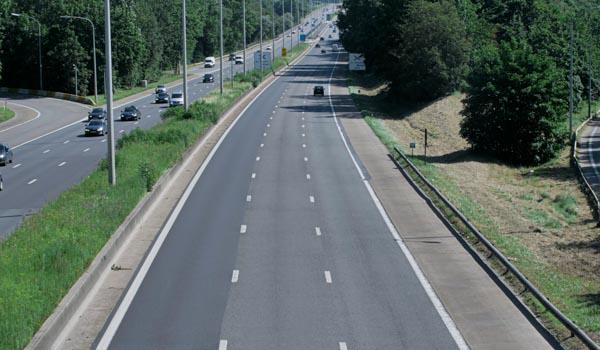
Emergency lane
The hard shoulder is a strip of road on the right-hand side of the carriageway, separated by a solid white line, reserved for vehicles that have broken down. It is forbidden to drive, stop or park on this strip, on pain of a 3rd degree offence and loss of 5 points.
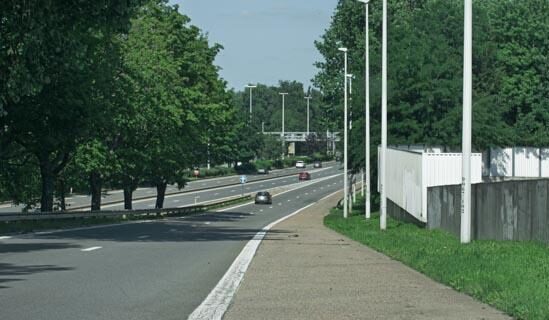
Freeway access
Access is forbidden to pedestrians, cyclists, mopeds, horse riders, hitched vehicles, animal drivers, towing vehicles, agricultural vehicles and fairground trains. Authorized vehicles must enter through the designated areas.
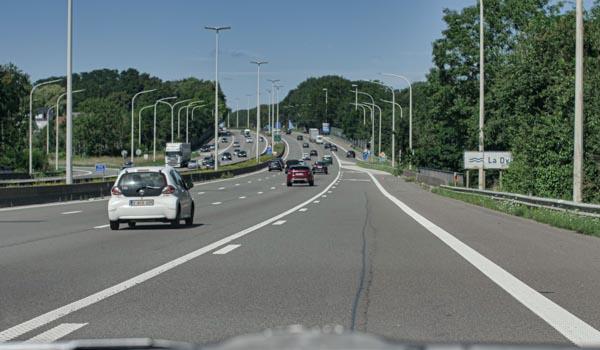
Speed limits
On freeways, the minimum speed is 70 km/h and the maximum 120 km/h. On the Brussels Ring, the limit is 100 km/h. Lower limits may be imposed near bends or roadworks.
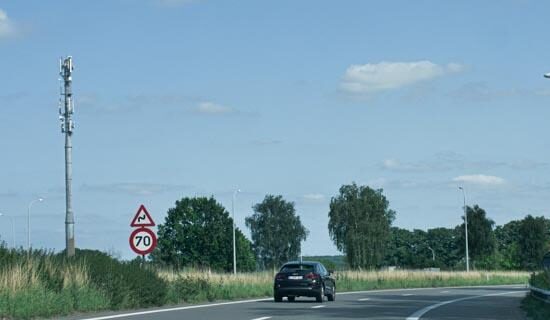
Highway bans
It is forbidden to make U-turns, drive the wrong way, reverse, tow a vehicle or use cross-connections (4th degree offences, -5 points). Also prohibited: processions, demonstrations, rallies, advertising parades and sporting events.
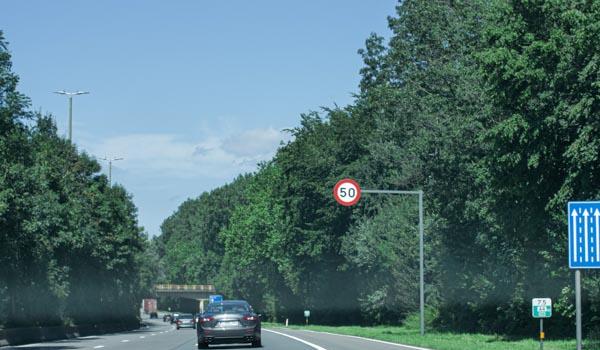
Position on the roadway
Vehicles should keep as close as possible to the right-hand edge. In case of density, motorcyclists can go up the lanes between the two left-hand lanes at max 50 km/h with a speed difference of max 20 km/h with the vehicles going up.
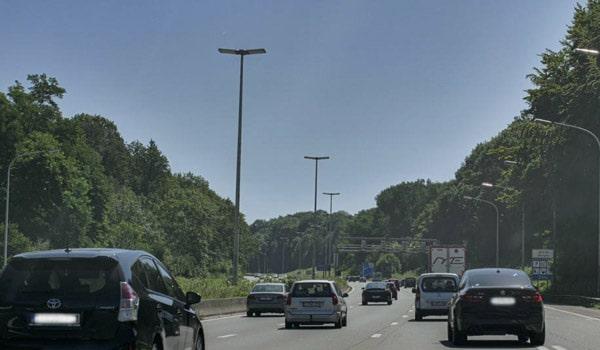
Freeway driving requires special care and strict adherence to the established rules. These fast lanes offer an efficient means of getting around, but also entail specific risks. A good knowledge of the rules and responsible driving are essential to guarantee the safety of all users.
