

Changing direction is an essential part of safe driving. It involves leaving the lane you’re in to take another, whether you’re turning left or right, or entering or leaving a traffic circle. Mastering this step ensures that traffic flows smoothly, while respecting the rules and other road users.
D. Change of direction
What is a change of direction?
To change direction is to turn left or right, to leave the carriageway on which you are driving and move into another lane. Entering a traffic circle is a change of direction that does not require the use of a turn signal. Exiting a traffic circle is a change of direction that requires the use of a turn signal. You are obliged to use the blinker before leaving the traffic circle.
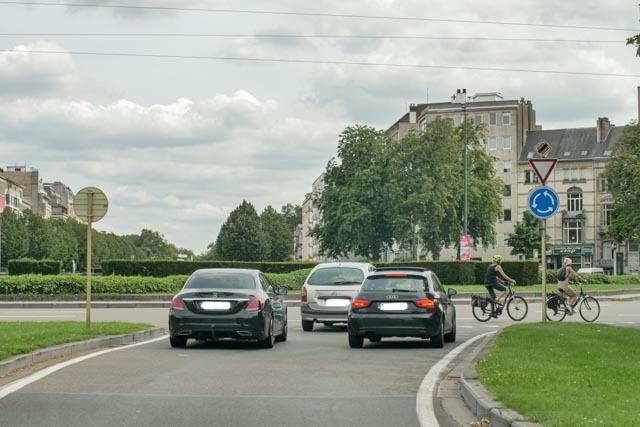


Before turning
Make sure there is no prohibition signal forbidding you to turn. Comply with the compulsory signal, requiring you to follow the direction. Follow the selection arrows. It is forbidden to follow a direction other than that indicated by the arrow on your lane. Take note of the white lines prohibiting you from crossing them. If you find that you are in the wrong lane, you must not cross the white line to change lanes.

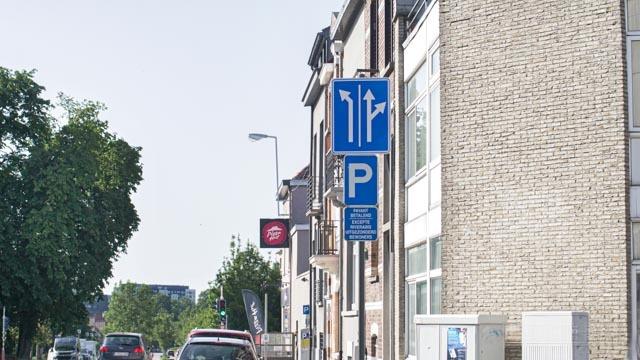
The driver turning right
Look in the rear-view mirror and turn on the blinker in plenty of time. This indication should cease as soon as the movement is completed. Keep as close as possible to the right-hand edge of the road.
The driver turning left
Drivers turning left must give way to oncoming traffic on the carriageway they are about to leave.
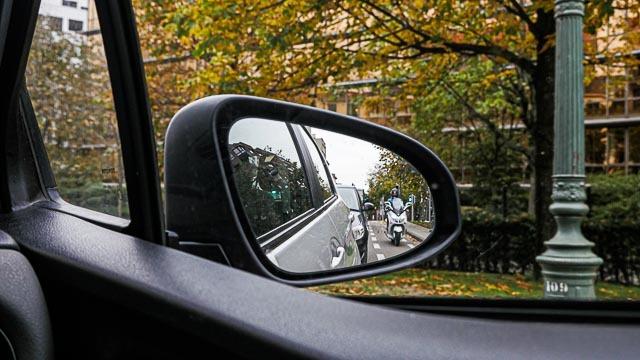
To make a safe change of direction, it’s essential to obey the signs, signal your intentions correctly and give way to other road users when necessary. Good preparation and careful execution of this maneuver guarantee safe, fluid driving.
