
Road markings are essential signage elements that guide and regulate traffic on our roads. Painted directly onto the pavement, they help to organize the flow of vehicles and ensure the safety of all users. Let’s discover the different types of markings and their meanings.
Road markings
The continuous white line
All drivers are forbidden to cross the line. It is forbidden to drive on the left of the line when it separates two directions of traffic. It is forbidden to overtake, change lanes, make a U-turn or turn left. This is a 3rd degree offence.
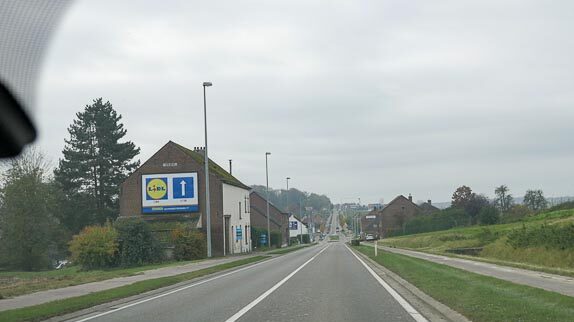
The broken white line
No crossing except to overtake, make a U-turn, change lanes or turn left. Shorter dashed lines closer together indicate a continuous line.

Juxtaposed lines
A solid white line next to a broken white line – the line on its side must be taken into account. A driver who has crossed the broken line to overtake may cross the solid line to turn round.
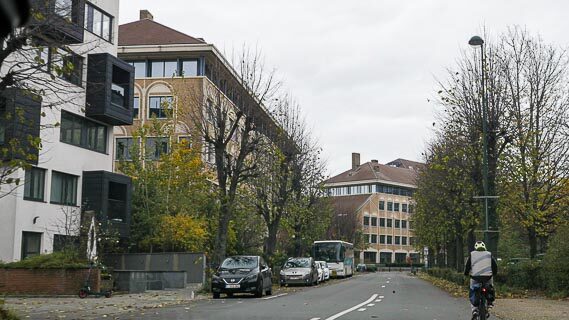
The orange line
Temporary markings for construction work. Can be continuous or discontinuous. Makes the continuous or discontinuous white line ineffective. This is a 3rd degree offence.
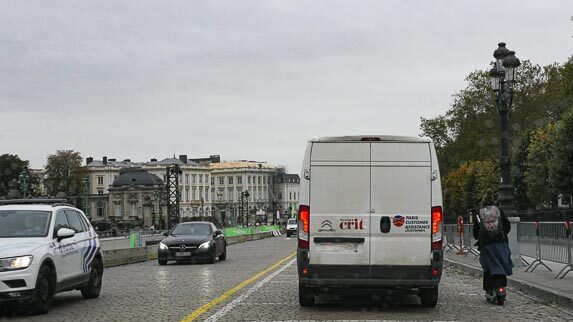
The bus lane
Traffic lane delimited by large dashed lines with the word BUS, accompanied by an F17 sign. Reserved for public transport vehicles and vehicles whose symbols are on the carriageway. Obligatory 10m before the crossroads to turn.
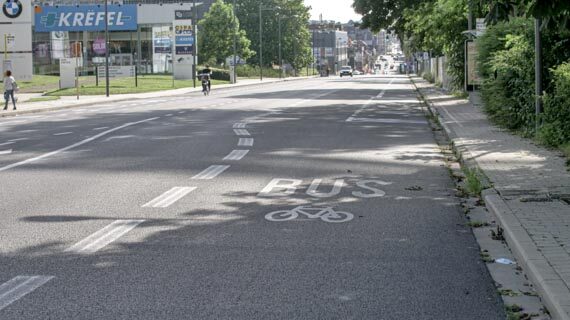
The special crossable site
Wide, continuous white line with F18 sign. Reserved for public transport and authorized vehicles. Crossable only to avoid an obstacle, cross, access parking, private property or change direction at an intersection.
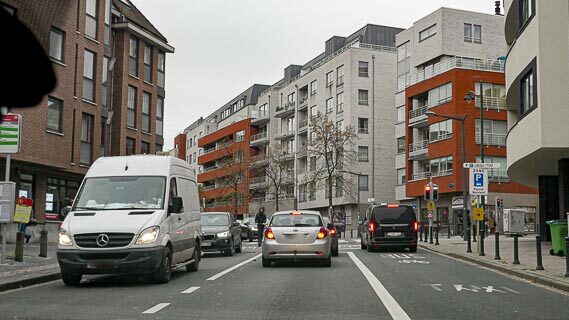
The rush-hour band
Strip delimited by long, closely spaced dashed lines. Open with arrow-shaped light signal, closed with red cross above the strip.
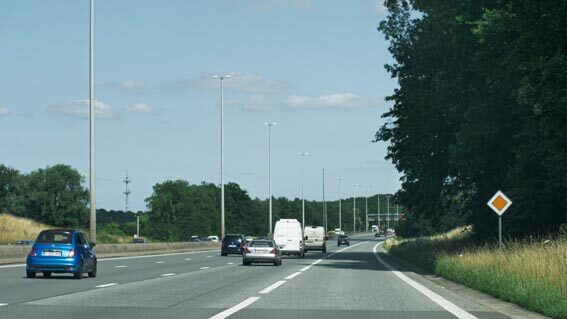
The actual edge of the roadway
A continuous white line marking the actual edge of the roadway, sidewalk or shoulder. No prohibition accompanies this marking.
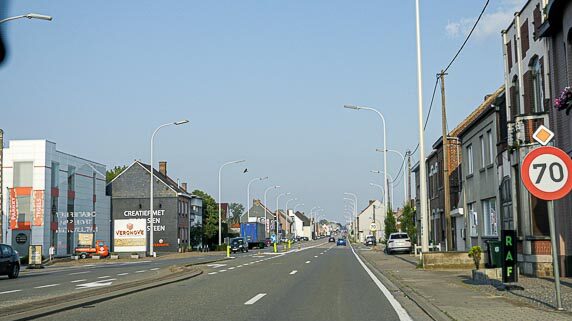
The real edge in discontinuous yellow
A wide discontinuous yellow line drawn on the actual edge of the roadway, the edge of a sidewalk or a projecting shoulder to make them more visible.
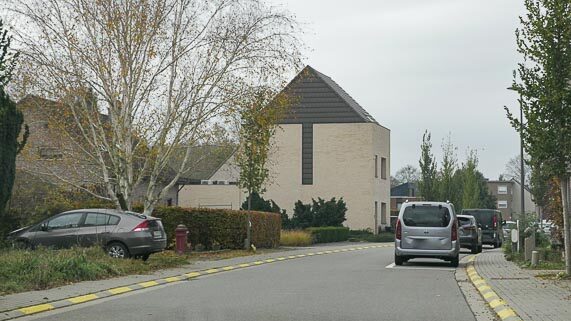
The fictitious edge of the roadway
A wide continuous white line drawn to mark the fictitious edge of the roadway.
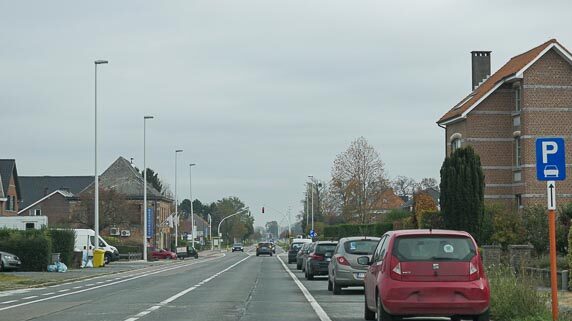
Road markings are an indispensable visual language for all drivers. Respecting them is crucial to road safety and the smooth flow of traffic. That’s why it’s essential to know what they mean, and to comply with them in all circumstances.
